
产品详情

Plastics - Component
The materials covered under this category are incomplete in certain constructional features or restricted in perbance capabilities and are intended for use as components of complete equipment bted for investigation rather than for direct separate use in the field. THE FINAL ACCEPTANCE OF THE COMPONENT IS DEPENDENT UPON ITS USE IN EQUIPMENT SUBMITTED TO UL.
GENERAL
This category covers materials that have been tested in accordance with established bs to define their properties in order to facilitate investigation of their use in end-use-product applications. The tests may include the determination of material flammability (burning characteristics), ignition characteristics from various thermal and electrical sources, electrical tracking and other electrical characteristics, physical and mechanical characteristics, and analytical tests. In addition, the effect of long-term exposure to elevated temperature (air-oven aging), water, ultraviolet light, cold, etc., on property retention may be investigated. Levels of perbance characteristics required for a particular end-use-product application are intended to be in accordance with the requirements of the end-use-product standard.
Note: The beters provided are generally based upon the use of traditional processing bs, such as injection-molding, extrusion, compression-molding, casting, filament winding, pultrusion, etc., to fabricate the finished part, unless it is otherwise specified that the beters represent an "additive manufacturing" or "3D printing" process. For plastics used in additive manufacturing, see Plastics for Additive Manufacturing (QMTC2).
In those cases where the materials have the same perbance characteristics, with the exception of weathering resistance, they are tabulated together as a group with each material designation separated by a comma. The individual Recognitions may include alternate designations as well as materials that are basically similar in comb but differ by some minor variation, such as molecular weight, lubricants, colorants, etc.
The individual material designations may sometimes include footnotes in parentheses. A footnote representing a portion of the material designation, as explained in the footnote, is called a "Designation footnote." The actual material designation, but not the footnote, is part of the required marking.
Example: ABC(#), where (#) = Single digit 1, 2 or 3 representing glass content. ABC1 is part of the marking for the grade ABC1.
The other type of footnote that provides inbation (ratings, perbance, appearance, etc., of the recognized material) is called an "Inbation footnote." These footnotes are not part of the required marking.
Example: ABC(f1), where (f1) = Suitable for outdoor use with respect to exposure to ultraviolet light, water exposure and immersion in accordance with ANSI/UL 746C, "Polymeric Materials - Use in Electrical Equipment Evaluations." ABC is part of the marking for the grade ABC.
Material Designation
The grade designation shall represent the manufacturer's unique catalogue or model number. This may be represented by a combination of characters (alpha/numeric/alphanumeric) to denote either a combal characteristic that has been considered as part of its certification or as an internal code not related to the comb of the material (for example, customer or lot number). Inclusion/omission of space, hyphen, plus, percentage, etc., from the original grade designation shall not be considered as a change in material designation.
Colors
The colors noted below are as pigmented by the material manufacturer; unless otherwise indicated, the property values are for the unpigmented (Natural color) material. Refer to Color Concentrates (QMQS2) and ANSI/UL 746D, "Polymeric Materials - Fabricated Parts," for limitations on the use of concentrates by the part molder or processor. The following abbreviations may be used in the individual Recognitions to represent the material color:
| Abbreviation | Color |
|---|---|
| AL | Aluminum |
|
ALL -AO -AT |
Any color - Any color (opaque only) - Any color (transparent only) |
| AM | Amber |
| BG | Beige |
| BK | Black |
| BL | Blue |
| BN | Brown |
| BZ | Bronze |
| CH | Charcoal |
| CL | Clear |
| GD | Gold |
| GN | Green |
| GY | Gray |
| IV | Ivory |
| NC | Natural (No pigmentation) |
| OL | Olive |
| OR | Orange |
| PK | Pink |
| RD | Red |
| SL | Silver |
| SM | Smoke |
| TL | Translucent |
| TN | Tan |
| TP | Transparent |
| VT | Violet |
| WT | White |
| YL | Yellow |
Note: Some of the above abbreviations may by prefixed with "Dk" or "Lt" to indicate "Dark" or "Light" versions of the respective colors.
Thickness
The following considerations are used for the indicated thickness:
1. When a distinct number is indicated under "Min Thk," the flame class and other property values indicated for that thickness are applicable to all higher thicknesses within the limits of the applicable test b (for example, UL 94 Vertical Flame Test b must have a maximum thickness of 13.0 mm).
2. When a thickness range is specified, such as 1.5 - 1.7 mm, the flame class and other property values are limited in applicability to the range specified, even though "Min Thk" may be indicated in the column heading. In this example, minimum thickness is 1.5 mm and maximum thickness is 1.7 mm. The applicability of the flame class and the other property values at other thicknesses has not been determined.
3. When a distinct thickness and a thickness range is separately indicated, such as 0.4 mm, 0.7 mm and 1.5 - 1.7 mm in the "Min Thk" column, the flame class and other properties are applicable to the specified thickness ranges. In this example, the flame class and other property values indicated for the 0.4 mm and 0.7 mm thicknesses are applicable to those specific thicknesses and any greater thickness up to the next specified thickness level. The flame class and other property values for the 1.5 - 1.7 mm thickness only apply to that particular thickness range. The applicability of the flame class and other property values at other thicknesses has not been determined.
4. When a distinct thickness is indicated under "Nom. Thk," the flame class and other property values are limited in applicability to this thickness.
Flammability
Materials may be classified based on burning tests conducted in accordance with ANSI/UL 94, "Tests for Flammability of Plastic Materials for Parts in Devices and Appliances," ANSI/UL 1694, "Tests for Flammability of Small Polymeric Component Materials," and ANSI/UL 723, "Test for Surface Burning Characteristics of Building Materials."
ANSI/UL 94 small-scale test data does not pertain to building materials, furnishings and related contents, and is intended solely for determining the flammability of plastic materials used in the components and parts of end-use-product devices and appliances, where the acceptability of the combination is determined by UL.
| TEST NAME (per ANSI/UL 94) | ||||||
|---|---|---|---|---|---|---|
|
Horizontal Burning Test |
20 mm Vertical Burning Test |
Thin Material Vertical Burning Test2 | Horizontal Burning Foamed Material Test3 |
500 Watt (125 mm) Vertical Test4 |
||
| Flame Rating Hierarchy | — | V-0 | VTM-0 | — | More Severe | 5VA |
| — | V-1 | VTM-1 | HF-1 |
↑ ↑ ↑ |
||
| — | V-2 | VTM-2 | HF-2 | 5VB | ||
|
HB (HB40/ HB75)1 |
— | — | HBF | Less Severe | ||
1 Equivalent rating based on IEC 60695-11-10, "Fire Hazard Testing - Part 11-10: Test Flames - 50 W Horizontal and Vertical Flame Test Methods"
2 The equivalent ISO standard for this test is ISO 9773, "Plastics - Determination of Burning Behaviour of Thin Flexible Vertical Specimens in Contact with a Small-Flame Ignition Source"
3 The equivalent ISO standard for this test is ISO 9772, "Cellular Plastics - Determination of Horizontal Burning Characteristics of Small Specimens Subjected to a Small Flame"
4 The equivalent IEC standard for this test is IEC 60695-11-20, "Fire Hazard Testing - Part 11-20: Test Flames - 500 W Fame Test Method"
Thermal Endurance
The materials covered by this program have been investigated with respect to thermal endurance of certain critical properties. The investigation was perbed as part of a long-term thermal-aging program or based on historical record in accordance with ANSI/UL 746B, "Polymeric Materials - Long Term Property Evaluations." The temperature below which a class of critical property will not be unacceptably compromised through chemical thermal degradation, over the reasonable life of an electrical product (relative to a reference material having a confirmed, acceptable corresponding perbance) is defined as the Relative Thermal Index (RTI). More than one RTI may be appropriate for a given material depending on the property requirements for a given application. In certain cases, higher temperatures are permitted if so specified by the end-use-product standard.
RTI Elec — Electrical RTI, associated with critical insulating properties.
RTI Mech Imp — Mechanical perbance with Impact RTI, associated with critical impact resistance, toughness, elongation and flexibility properties.
RTI Mech Str — Mechanical perbance without Impact RTI, associated with critical mechanical strength and structural integrity where impact resistance, resilience and flexibility may not be essential.
Resistance to Ignition and Tracking Properties
Perbance may be investigated with respect to electrical track resistance, ability to resist ignition from electrical sources, and other electrical properties. In order to avoid an excessive level of implied precision and bias, material perbances for several tests are recorded as Perbance Level Categories (PLC), based on the mean test results (rather than recording the exact numerical results), as indicated in the table following the test debion.
Hot-wire Ignition (HWI; ASTM D3874, IEC 60695-2-20) — Perbance is expressed as the mean number of seconds needed to ignite standard specimens (if the material ignited). An HWI PLC 0 may be due to all the test specimens melting away without any ignition.
|
HWI Range Mean Ignition Time (in sec) |
Assigned PLC |
|---|---|
| 120 and longer | 0 |
| 60 through 119 | 1 |
| 30 through 59 | 2 |
| 15 through 29 | 3 |
| 7 through 14 | 4 |
| Less than 7 | 5 |
High-current-arc Ignition (HAI; ANSI/UL 746A) — Perbance is expressed as the number of arc-rupture exposures (standardized as to electrode type and shape and electric circuit) that are necessary to ignite a material when they are applied at a standard rate on the surface of the material.
|
HAI Range Mean Number of Arcs to Cause Ignition |
Assigned PLC |
|---|---|
| 120 and greater | 0 |
| 60 through 119 | 1 |
| 30 through 59 | 2 |
| 15 through 29 | 3 |
| Less than 15 | 4 |
Glow-wire Flammability Index (GWFI) (IEC 60695-2-12) and Glow-wire Ignition Temperature (GWIT) (IEC 60695-2-13)
GWFI is the maximum temperature at which all flaming and glowing is ceased within 30 seconds after removal of the glow-wire during three subsequent tests and is expressed in °C.
GWIT is the temperature which is 25°C (30°C for 900°C and 930°C) higher than the maximum test temperature which does not cause ignition of a test specimen (or a sustained flaming combustion does not occur for a time longer than 5 seconds and the specimen is not totally consumed) of given thickness during three subsequent tests and is expressed in °C.
High-voltage-arc Tracking Rate (HVTR; ANSI/UL 746A) — Denoted as the rate, in mm/min, that a tracking path can be produced on the surface of the material under standardized test conditions. A notation is made if ignition on the material takes place. The results of testing the nominal 3 mm thickness are considered representative of the material's perbance in any thickness.
|
HVTR Range (in mm/min) |
Assigned PLC |
|---|---|
| 0 through 10 | 0 |
| 10.1 through 25.4 | 1 |
| 25.5 through 80 | 2 |
| 80.1 through 150 | 3 |
| Greater than 150 | 4 |
High-voltage, Low-current-arc Resistance (D495; ASTM D495) — Expressed as the number of seconds that a material resists the bation of a surface-conducting path when subjected to an intermittently occurring arc of high-voltage, low-current characteristics. The results of testing the nominal 3 mm thickness are considered representative of the material's perbance in any thickness.
|
D495 Range Mean Time of Arc Resistance (in sec) |
Assigned PLC |
|---|---|
| 420 and longer | 0 |
| 360 through 419 | 1 |
| 300 through 359 | 2 |
| 240 through 299 | 3 |
| 180 through 239 | 4 |
| 120 through 179 | 5 |
| 60 through 119 | 6 |
| Less than 60 | 7 |
ASTM Comparative Tracking Index (CTI; ASTM D3638) — Expressed as that voltage which causes tracking after 50 drops of 0.1% ammonium chloride solution have fallen on the material. The results of testing the nominal 3 mm thickness are considered representative of the material's perbance in any thickness.
|
ASTM CTI Range Tracking Index (in volts) |
Assigned PLC |
|---|---|
| 600 and greater | 0 |
| 400 through 599 | 1 |
| 250 through 399 | 2 |
| 175 through 249 | 3 |
| 100 through 174 | 4 |
| Less than 100 | 5 |
IEC Comparative Tracking Index (CTI; IEC 60112) — Expressed as the maximum voltage at which five specimens withstand the test period for 50 drops without failure and at a voltage of 25 V lower than the maximum 50-drop figure, the specimen withstands 100 drops. If this is not the case, the maximum 100-drop withstand voltage shall be reported. The results of testing the nominal 3 mm thickness are considered representative of the material's perbance in any thickness.
|
IEC CTI Range Tracking Index (in volts) |
Assigned Material Group |
|---|---|
| 600 and greater | I |
| 400 through 599 | II |
| 175 through 399 | IIIa |
| 100 through 174 | IIIb |
Inclined-plane Tracking Voltage (IPT; ASTM D2303) — Expressed as the highest voltage at which the time-to-track 25.4 mm (1 in.) from the lower electrode for each test specimen is above 60 min for test voltages between 1 kV - 5 kV and above 300 min for test voltages above 5 kV.
In addition to minimum electrical and ignition test levels, materials that are used in applications involving support or contact with current-carrying parts are also required to display a minimum stability (heat distortion, moisture resistance, dimensional stability and mold stress) perbance level, as described in ANSI/UL 746C.
Electrical Insulation Properties
Dielectric Strength - Alternate Current (ASTM D149 or IEC 60243-3) and Direct Current (ASTM D3755 or IEC 60243-2) — Expressed as kV/mm at which the dielectric breakdown occurs when tested as per the short-time test b as described in ASTM D149, "Standard Test Method for Dielectric Breakdown Voltage and Dielectric Strength of Solid Electrical Insulating Materials at Commercial Power Frequencies," or IEC 60243-3, " Electric Strength of Insulating Materials - Test Methods - Part 3: Additional Requirements for 1,2/50 μs Impulse Tests," for Alternate current, and ASTM D3755, "Standard Test Method for Dielectric Breakdown Voltage and Dielectric Strength of Solid Electrical Insulating Materials under Direct-Voltage Stress," or IEC 60243-2, "Electric Strength of Insulating Materials - Test Methods - Part 2: Additional Requirements for Tests Using Direct Voltage," for Direct current. There are two sample conditionings for testing as per UL 746A, "Polymeric Materials - Short Term Property Evaluations," and results obtained with the conservative rating is published as the Dielectric Strength value of a material.
Volume Resistivity and Surface Resistivity (ASTM D257 or IEC 62631-3-3) — Volume resistivity is calculated from resistance and dimensional data by applying a voltage across the thickness of the specimen and is expressed as 10x ohm-cm. Surface resistivity is calculated from resistance and dimensional data by applying a voltage across the surface of the specimen and is expressed as 10x ohms/square. There are two sample conditionings for testing as per UL 746A and results obtained with the conservative rating is published as the Volume Resistivity and Surface Resistivity of a material.
Mechanical Properties
Tensile Strength (ISO 527-2) — The maximum tensile stress to resist debation under tension which a material can withstand before rupture. It is expressed in Megapascals (MPa) and is applicable for molding and extrusion grade plastics. ISO 527-3, "Plastics - Determination of Tensile Properties - Part 3: Test Conditions for Films and Sheets," is the test b applicable for films, and ISO Guide 39, "General Requirements for the Acceptance of Inspection Bodies,"for Elastomers.
Flexural Strength (ISO 178) — The maximum bending stress a material can withstand before it yields and is expressed in MPa. Applicable for thermoplastic molding, extrusion and casting materials, rigid thermoplastics sheets; thermosetting molding materials, and thermosetting sheets.
Tensile Impact (ISO 8256) — Determines the energy needed to break a specimen under a high speed tensile load introduced through a swinging pendulum. It is exp ressed in kJ/m2. The b is applicable for specimens prepared from molding materials and for specimens cut from finished or semi-finished products.
Izod Impact (ISO 180) — Determines the relative susceptibility to fracture a test specimen and is expressed in kJ/m2. This is a common test to understand notch sensitivity in plastics. Applicable for rigid thermoplastic molding and extrusion materials, rigid thermosetting molding materials, fiber-reinforced thermosetting and thermoplastic composites and thermotropic liquid-crystal polymers.
Charpy Impact (ISO 179-1) — Determines the amount of energy absorbed by a material during fracture, which is a measure of the material's toughness. Charpy Impact strength is expressed as kJ/m2. Applicable for rigid thermoplastic molding and extrusion materials, rigid thermosetting molding materials, fiber-reinforced thermosetting and thermoplastic composites and thermotropic liquid-crystal polymers.
Short-Term Thermal Properties
Heat Deflection Temperature - HDT (ISO 75-2) — HDT is expressed in °C and determines the temperature of deflection under load of plastics using a flexural stress of either 0.45 and 1.80 MPa. Applicable for filled plastics and fiber-reinforced plastics.
Ball Pressure Test (IEC 60695-10-2) — This test b determines dimensional stability of polymeric materials under stress at elevated temperatures and is expressed in °C. The b is not appropriate for certain elastomers, foamed materials, and other materials that tend to be soft at room temperature.
Dimensional-Change Properties
Dimensional Stability (ASTM D1042 or ISO 2796) — Expressed as a percentage, determines the changes of linear dimensions which occur when the test specimens have been subjected to specified environments for a definite period of time and reconditioned. The b provides a means for measuring in plastic specimens the dimensional changes such as shrinkage or expansion, developed under specific heat and water exposure conditionings.
RoHS Compliance
The materials covered by this program have been investigated for the presence of lead, cadmium, mercury, hexavalent chromium, polybrominated biphenyls (PBBs), polybrominated diphenyl ethers (PBDEs), bis(2-ethylhexyl) phthalate (DEHP), butyl benzyl phthalate (BBP), dibutyl phthalate (DBP) and diisobutyl phthalate (DIBP) with respect to the maximum concentration levels in homogeneous materials specified in DIRECTIVE 2011/65/EU OF THE EUROPEAN PARLIAMENT AND OF THE COUNCIL of 8 June 2011 on the restriction of the use of certain hazardous substances in electrical and electronic equipment (recast) and the COMMISSION DELEGATED DIRECTIVE 2015/863 amending Annex II to Directive 2011/65/EU. The investigation was perbed in accordance with UL 746R, "Outline of Investigation for Restricted Use Substances in Polymeric Materials." The substance testing was conducted using IEC 62321, "Determination of Certain Substances in Electrotechnical Products," standard bs. The maximum acceptable substance concentration levels in homogeneous materials are specified in the table below.
| Substance |
Maximum Acceptable Substance Concentration (% By Mass) |
|---|---|
| Lead (Pb) |
 0.1% 0.1%
|
| Mercury (Hg) | |
| Hexavalent chromium (Cr(VI)) | |
| Total polybrominated biphenyls (PBBs) | |
| Total polybrominated diphenyl ethers (PBDEs) | |
| Cadmium (Cd) |
0.01%
|
| Bis(2-ethylhexyl) phthalate (DEHP)* |
0.1%
|
| Butyl benzyl phthalate (BBP)* | |
| Dibutyl phthalate (DBP)* | |
| Diisobutyl phthalate (DIBP)* |
* The compliance date for the phase-in of DEHP, BBP, DBP and DIBP requirements is July 22, 2019.
Note: ppm = mg/kg; 1000 ppm = 0.1% by mass
UL makes no representations or warranties regarding the usability, public health, medical or toxicological effects or environmental impact of any product or substance based upon these test values.
Non-Halogenated Materials
The materials covered by this program have been investigated in accordance with UL 746H, "Outline of Investigation for Non-Halogenated Materials." The halogen testing is conducted using combustion-ion chromatography.
The maximum acceptable halide concentration levels in homogeneous "non-halogenated" materials are specified in the table below.
| Halogen(s) |
Non-Halogenated Material Maximum Acceptable Concentration (% By Mass) |
|---|---|
| Chlorine (Cl) |
0.09
|
| Bromine (Br) |
0.09
|
| Fluorine (F) |
0.09
|
| Total chlorine, bromine and fluorine |
0.15
|
The maximum acceptable halide concentration levels in homogeneous "non-chlorine" and "non-bromine" materials are specified in the table below.
| Halogen(s) |
Non-Chlorine and Non-Bromine Material Maximum Acceptable Concentration (% By Mass) |
|---|---|
| Chlorine (Cl) |
0.09
|
| Bromine (Br) |
0.09
|
| Total chlorine and bromine |
0.15
|
Note: ppm = mg/kg; 1000 ppm = 0.1% by mass
UL makes no representations or warranties regarding the usability, public health, medical or toxicological effects or environmental impact of any product or substance based upon these test values.
CONDITIONS OF ACCEPTABILITY
Unless specified otherwise in the individual Recognitions, consideration is to be given to the following Conditions of Acceptability when these components are employed in the end-use equipment:
1. Material traceability for parts covered under Fabricated Parts (QMMY2).
2. Material identification for a device employing parts molded of these materials shall specify the parts' wall thickness, color, material identification, and traceability.
3. Material modification — For any changes in the bulation or comb of the material, such as addition, deletion, or change in level of additives, the requirements for Polymer Variations in ANSI/UL 746A shall be followed.
4. Materials must meet applicable requirements concerning the molding and fabricating of finished parts as described in ANSI/UL 746D. This includes, but is not limited to, the restricted use of regrind thermoplastic material to amounts less than or equal to 25% unless specified in the individual Recognitions.
5. Unless otherwise indicated, suitability for use when exposed to weathering, oils, soaps, chemicals, x-rays, and the like has not been determined.
6. Investigation of parts for other properties in accordance with the applicable UL end-use-product standard and/or the requirements in ANSI/UL 746C.
Additional Conditions of Acceptability may be found in the individual Recognition Report available from the manufacturer.
GENERIC MATERIAL SYMBOLS
The generic material symbols are based upon the terminology developed in ISO 1043, "Plastics - Symbols and Abbreviated Terms," and ISO 1629, "Rubber and Latices - Nomenclature."
FOAMED MATERIALS
Materials that have been foamed with the introduction of a chemical blowing agent or inert gas may have significantly different properties than the unfoamed or solid material b; therefore, ratings that are established for solid (unfoamed) material do not automatically apply to the foamed version of that same material.
MATERIALS FOR USE IN SPECIAL ENVIRONMENTS
Investigation of materials for specific end-use-product applications where requirements exist for the retention of properties after exposure to certain critical operating and/or environmental conditions may be indicated in the individual Recognitions.
COLUMN HEADING ABBREVIATIONS
The following abbreviations may be used in the column headings in the individual Recognitions:
| Abbreviation | Term |
|---|---|
| Flame Class | ANSI/UL 94 Flammability Classification |
| Mtl Dsg | Material Designation |
| Col | Color |
| Min Thk | Minimum Thickness |
| Thk Rg | Thickness Range |
| Den Range g/cc | Density Range, g/cc |
| Elec | Electrical |
| RP | Radiant Panel |
| RTI | Relative Thermal Index |
| HWI | Hot-wire Ignition |
| HAI | High-current-arc Ignition |
| HVTR | High-voltage-arc Tracking Rate |
| D495 | Arc Resistance |
| CTI | Comparative Tracking Index |
| IPT | Inclined-plane Tracking Voltage |
| Mech | Mechanical |
| Tnsl | Tensile |
| Elong | Elongation |
| Str | Strength |
| Imp | Impact |
RELATED PRODUCTS
See:
Systems, Electrical Insulation (OBJY2)
Coatings for Use on Recognized Printed Wiring Boards (QMJU2)
Color and Other Additive Concentrates (QMQS2)
Metallized Parts (QMRX2)
Supplier Components for Use in the Fabrication of Metallized Parts (QMSS2)
Mold-release Lubricants (QMSX2)
Plastics for Additive Manufacturing (QMTC2)
Plastics for Additive Manufacturing, Proprietary (QMTE2)
Polymeric Materials - Filament-wound Tubing, Industrial Laminates, Vulcanized Fiber, and Materials for Use in Fabricating Recognized Printed Wiring Boards (QMTS2)
Polymeric Adhesive Systems, Electrical Equipment (QOQW2)


优尔检测电线电缆全球燃烧测试中心
优尔检测(广东)有限公司-优尔检测华南检测中心,地址:惠州市博罗县石湾镇滘源路滘吓冯屋草州A栋和C栋,实验室和办公用地:4500平米,总投资3000多万,拥有仪器设备500余套,在物理,化学,可靠性,环保(RoHS, Reach,CP65等),燃烧等方面拥有丰富的检测经验和技术实力.依据全球各国标准对电线电缆及橡塑化工材料在阻燃、耐火、低烟、无卤、环保、可靠性、电气特性方面的要求而建立。在全球各大认证机构(UL、VDE、CCC、IMQ、 TUV-RHEINLAND、TUV-SUD、CSA、BASEC、KEMA、PSE、KC、TLC、ETC、GRL、ANATEL、EAC)和广大客户的认可和支持下,我们希望能成为燃烧测试基地,服务于来自全球的终端客户、电商平台、布线厂商、线缆及材料企业!
优尔检测电线电缆全球燃烧测试中心,仅燃烧测试实验室用地就达到1100多平方,投资约1500多万,
电线电缆燃烧测试中心检测范围:
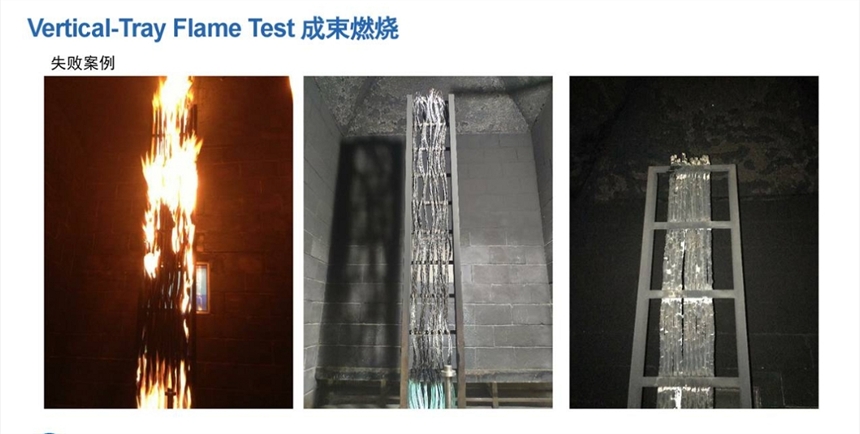
(1)网线/光缆/功率线/火灾报线/天线:美国UL/加拿大CSA标准: CM/CMR/CMP/FT4/FT6级大型燃烧;
(2)欧洲建筑法规强制指令CPR EN50399标准成束热释放量燃烧,B,C,D,E等级全项测试;
(3)国标GB18380线缆成束燃烧 A, B, C,D级成束燃烧;
(4)英国耐火线缆BS6387和BS8491,GB/T 19666(N,NJ,NS);
(5)美国VW-1/IEC60332-1-2/EN60332-1-2单根垂直燃烧;
(6)橡塑材料UL94/国标GB/T 8815阻燃测试;
( 7)氧指数、卤酸气体、灼热丝、漏电起痕、PH值等测试
产品体系认证:
UL、CCC、CSA、CE、ETL、TUV、VDE、PSE、KTL、GS、FDA、FCC、e-Mark、SASO、GOST、DOT、国军标等全球认证服务 ;
ISO9001、ISO14000、SA8000、TS16949、OHSA18000等国际质量体系认证;
安规环保检测: 安全、环保、环境、燃烧、EMC、RF、RoHS、REACH等项目检测;
安规技能培训: 产品安全测试、实验室操作人员培训、安规工程师培训、专业技能培训等
详询Sunny 139-1314-2465